
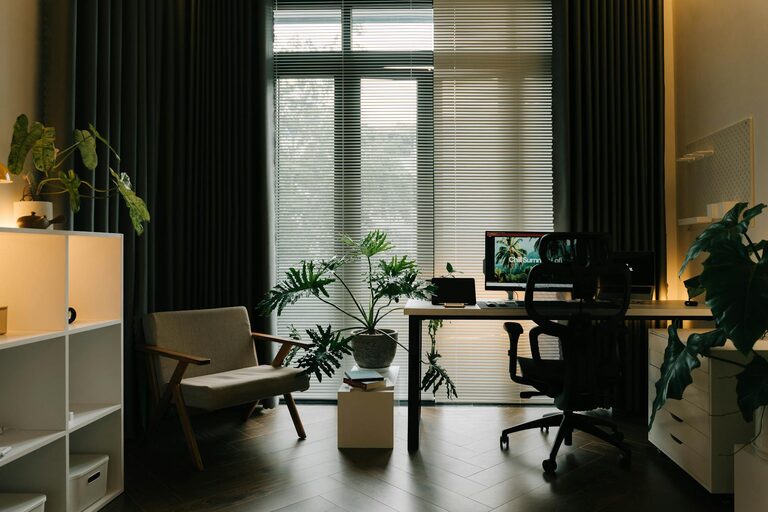
Creating a home office that feels cosy and inviting can significantly improve your work experience. Whether you work from home full-time or just need a dedicated spot for occasional tasks, having a comfortable and well-designed space can boost motivation and reduce stress. Below, we share easy-to-follow tips to help you craft a home office that balances comfort with functionality.
1. Choose the Right Location
Selecting the best spot for your office is the foundation of a comfortable workspace.
– Natural Light: Position your desk near a window if possible. Natural light boosts mood and reduces eye strain.
– Quiet Area: Aim for a quiet corner or room where you can focus without distractions.
– Separate from Living Spaces: If space allows, separate your office from busy areas like the kitchen or lounge to help distinguish work time.
2. Invest in Comfortable Furniture
Comfortable furniture plays a vital role in making your office inviting and ergonomic.
– Ergonomic Chair: A chair with good back support helps maintain posture and reduces discomfort during long work hours.
– Spacious Desk: Choose a desk that fits your needs with enough space for your computer, documents, and other essentials.
– Additional Seating: Consider adding a cosy armchair or small sofa if space permits, to create a relaxing spot for reading or brainstorming.
3. Personalise Your Workspace
Adding personal touches makes your office feel welcoming and uniquely yours.
– Decor: Use your favourite colours in accessories like cushions, rugs, or artwork to create a warm ambience.
– Plants: Indoor plants bring life and freshness to the room, while also improving air quality.
– Photos and Mementos: Display items that make you smile or inspire creativity, such as photos or souvenirs.
4. Optimise Lighting
Good lighting is key to a productive and inviting workspace.
– Layered Lighting: Combine overhead lights with desk lamps and floor lamps to control brightness and reduce shadows.
– Warm Bulbs: Use bulbs with a warm colour temperature to create a cosy atmosphere while maintaining adequate brightness.
– Positioning: Avoid placing bright lights directly behind your screen to reduce glare, and consider adjustable lamps for task lighting.
5. Keep Organised and Clutter-Free
A tidy office helps clear your mind and focus on work.
– Storage Solutions: Use shelves, filing cabinets, or storage boxes to keep paperwork and supplies neatly organised.
– Cable Management: Use clips or conduits to keep cables tidy and prevent a tangled mess.
– Regular Decluttering: Make it a habit to clear your desk at the end of each day to maintain a clean workspace.
6. Include Soft Textiles and Warm Colours
Soft textures and warm tones make the space feel inviting and less sterile.
– Rugs and Cushions: Add soft rugs underfoot and cushions on chairs for extra comfort.
– Curtains or Blinds: Choose fabric window coverings that help control light and add texture.
– Colour Palette: Opt for calming shades like soft greys, warm beiges, muted greens or blues to create a soothing environment.
7. Incorporate Technology Thoughtfully
Modern tools can enhance your workspace without overwhelming it.
– Wireless Devices: Use wireless keyboards, mice, and headphones to reduce clutter.
– Monitor Stands: Elevate screens to eye level for better posture and more desk space.
– Smart Plugs and Lighting: Consider smart devices that allow you to adjust lighting or power with ease, adding convenience.
8. Create Zones for Different Tasks
If your space allows, divide your office into zones to support various activities.
– Work Zone: Your desk and computer area for focused tasks.
– Creative Zone: A space with a whiteboard, pinboard, or sketchpad for brainstorming.
– Relaxation Zone: A comfy chair or nook to take breaks and recharge.
Colour coding or different furniture styles can help visually separate these zones.
9. Pay Attention to Acoustics
Sound quality matters, especially if you join virtual meetings or need concentration.
– Soft Furnishings: Rugs, curtains, and cushions can help absorb sound and reduce echo.
– Noise-Cancelling Headphones: These can be excellent for blocking distractions.
– White Noise Machines: Consider these if external noise is a problem.
10. Make It Flexible
Adaptability allows your office to adjust to changing needs or moods.
– Mobile Furniture: Choose desks or chairs with wheels for easy reconfiguration.
– Adjustable Desk Height: A sit-stand desk can promote movement and reduce fatigue.
– Dual-Purpose Items: Use furniture that serves multiple functions, like a storage ottoman which doubles as seating.
—
Creating a cosy and inviting home office does not necessarily require a large budget or space. By focusing on comfort, personal style, good lighting, and organisation, you can design a workspace that supports your productivity and well-being. Remember, the goal is to make your home office a place you enjoy spending time in, helping you work better every day.